Not every sick tree has to come down. Here's how to tell what you're looking at, and when to ask for someone to take a look.
Emerald ash borer
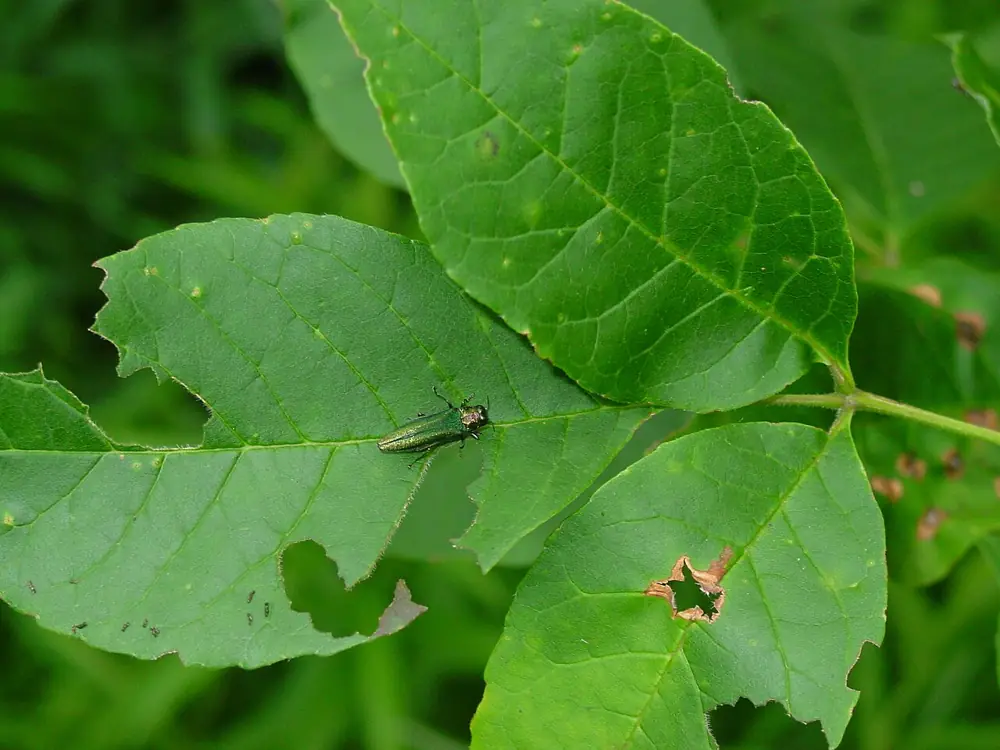

Emerald ash borer is a small green beetle from Asia whose larvae tunnel under ash bark and cut off the tree's water supply. It was first found in western Pennsylvania in June 2007 and had reached every county by 2019. Heavy infestations can kill a tree in as little as three years (Penn State Extension).
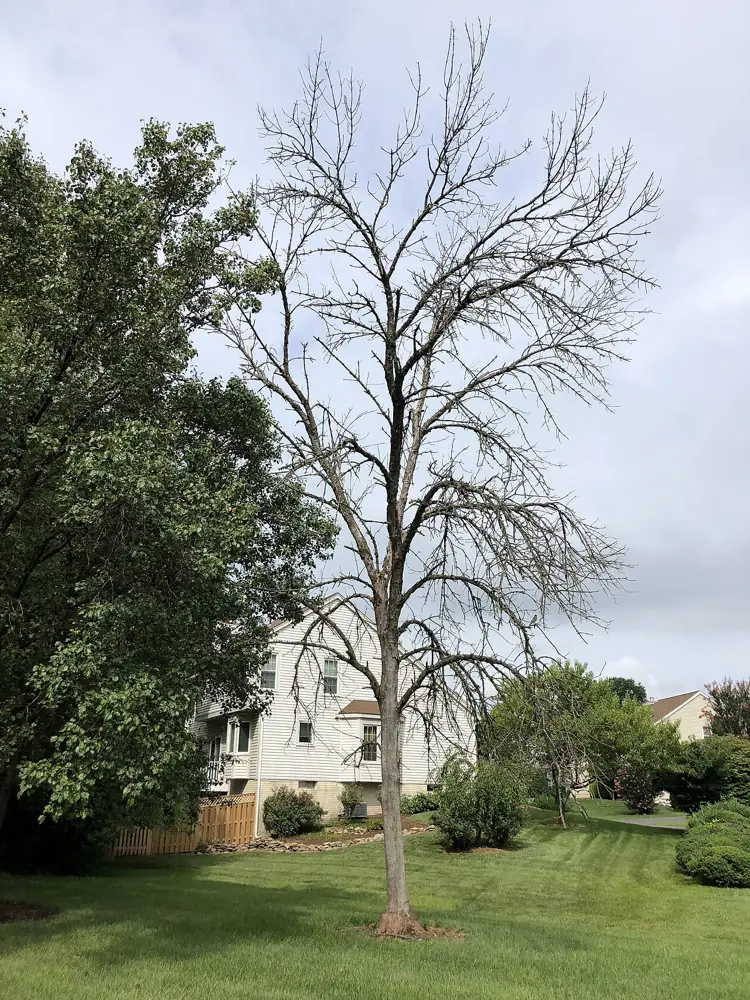

Signs: thinning at the top of the crown, D-shaped exit holes about an eighth of an inch wide, woodpeckers flaking off patches of bark ("blonding"), and sprouts along the lower trunk.
Save or remove? A healthy, valuable ash can be protected with insecticides containing imidacloprid or similar products, applied as soil drenches, soil injections or trunk injections in May or early June and repeated on the product's schedule. Treatment works best when started before the tree is infested. An ash that has already lost a large share of its canopy is rarely worth treating, and dead ash becomes brittle and dangerous quickly. Removing it while it's still sound is cheaper and safer: see tree removal in Lancaster.
For a full walkthrough of ash borer and spongy moth (identifying ash, treatment options, egg-mass removal, and free local help), see our emerald ash borer & spongy moth guide.
Spotted lanternfly
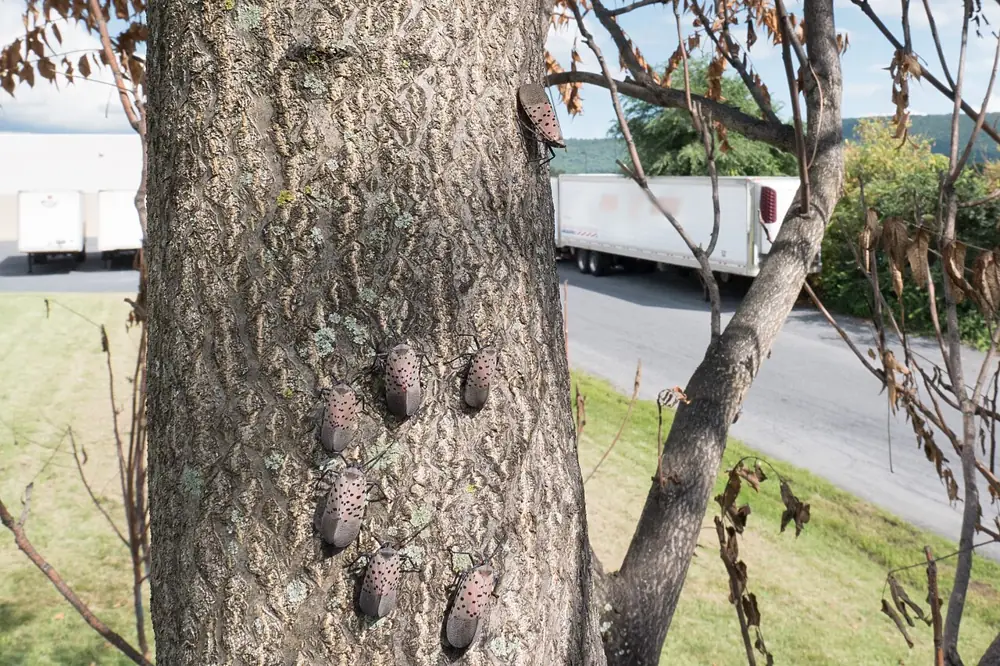

Spotted lanternfly was first found in the U.S. in Berks County in 2014, and Lancaster County is inside the state quarantine, which covered 56 counties as of 2025 (PA Department of Agriculture). The adults are gray with black spots and red underwings, and they're hard to miss in late summer. They feed on many plants and are especially damaging to grapevines.
Most shade trees survive lanternfly feeding. The bigger nuisance is the sticky "honeydew" they drip, which grows black sooty mold on decks, cars and plants underneath. The most useful step is removing tree of heaven (Ailanthus), the invasive tree they prefer. Cutting it alone makes it worse: it re-sprouts aggressively from the roots. Penn State Extension recommends treating the standing tree with a systemic herbicide (glyphosate or triclopyr) between July 1 and the first fall color, waiting for it to die back, then cutting it, and watching for sprouts the following year. Once it's dead the stump can be ground out.
Other signs a tree is in trouble
- Mushrooms or conks at the base or on the trunk, which often mean decay inside.
- Cracks, cavities or bark falling off in large patches.
- Leaves that are small, yellow or drop early while nearby trees of the same kind look fine.
- New lean or heaving soil at the base: a root problem that needs looking at soon.
- Construction damage: trenching, grading or parking on the root zone often shows up as decline two to five years later.
Common questions
Should I hire a certified arborist?
For deciding whether a valuable tree can be saved, yes: an ISA Certified Arborist has passed an exam on tree biology and care. For straightforward removals and trimming, an experienced, insured crew is what matters most. Ask whether an arborist is on staff if you want a health assessment. More on when you need an arborist.
Is it worth treating my ash tree?
If the tree is healthy, large and in a spot where you value its shade, treatment is often worth it compared with the cost of removing a big dead tree later. If it's already in decline, removal is usually the better money.
Should I report spotted lanternfly?
Lancaster County is already inside the quarantine, so sightings here generally don't need reporting; the state asks residents to destroy the insects and their egg masses. Businesses moving goods out of the quarantine zone have permit requirements through the Pennsylvania Department of Agriculture.